



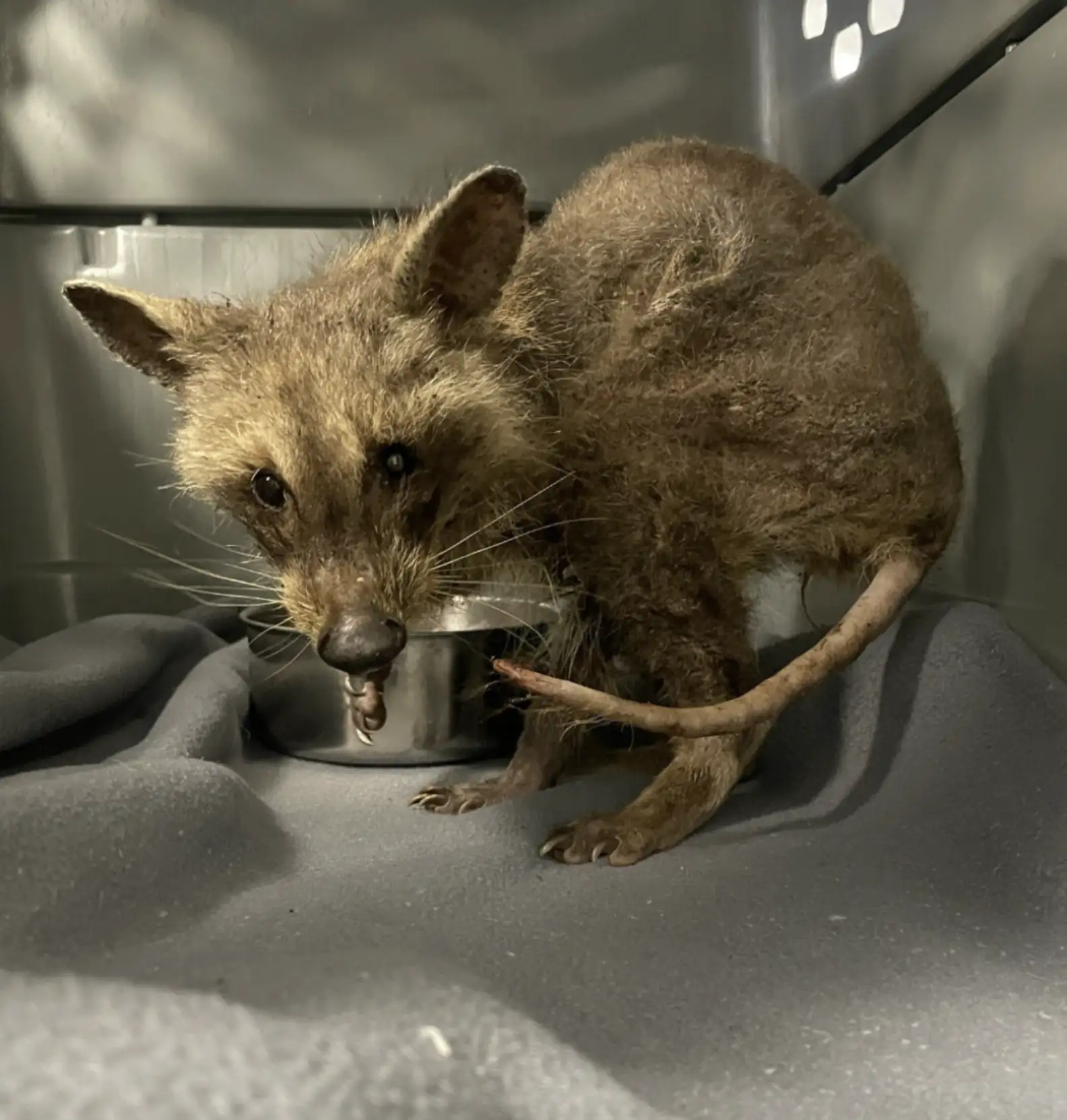
At first glance, no one could have guessed the real identity of the fragile animal later named Possum.
A passerby in Pennsylvania found a weak, struggling animal, dangerously thin and almost bald. Its long, hairless tail and narrow face made it seem like a very sick opossum.
Without hesitation, the rescuer rushed her to the Schuylkill Centre for Environmental Education for help.
But as soon as experts examined her, they realised something surprising: this wasn’t an opossum at all.
She was actually a raccoon.
Because raccoons are considered a high-risk rabies species and require specialised treatment, the team quickly transferred her to the Aark Wildlife Rehabilitation and Education Centre, where she could receive proper care.
At Aark, Possum began intensive treatment. She was given fluids to combat dehydration and treated for severe mange and skin infections. At first, her condition was critical — but slowly, things began to change.
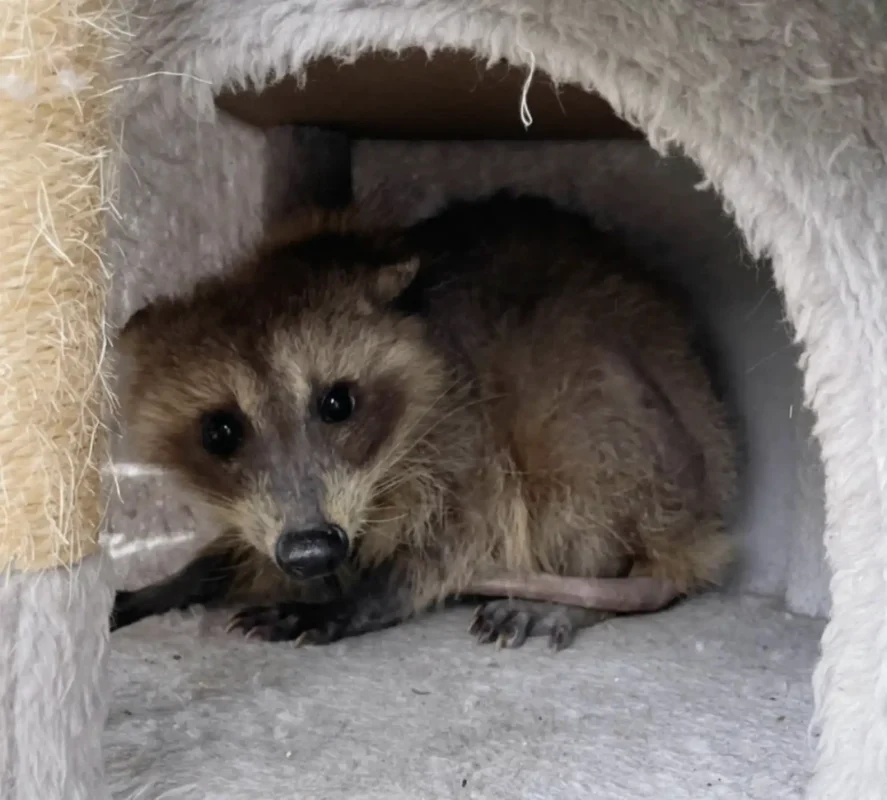
Over the following weeks, her appetite returned. She became more energetic. Her skin gradually healed, and signs of her true identity started to reappear.
Little by little, Possum began acting like a raccoon again.
Clinic director Amanda Leyden described her recovery as remarkable. As Possum regained strength, she became more alert, curious, and especially active during feeding.
But what really surprised the team was her personality.
Unlike most raccoons, Possum is unusually neat. She keeps her space clean and rarely makes a mess — something rescuers lovingly describe as being “polite.”
Although she still has a journey ahead before making a full recovery, the team remains hopeful. Their goal is to eventually return her to the wild, where she belongs.
For now, Possum is safe — surrounded by people who are committed to giving her a second chance.
Cases like Possum’s remind rescuers why they do this work: witnessing an animal’s return from the brink is extraordinary, and keeps them inspired to save lives again and again.