



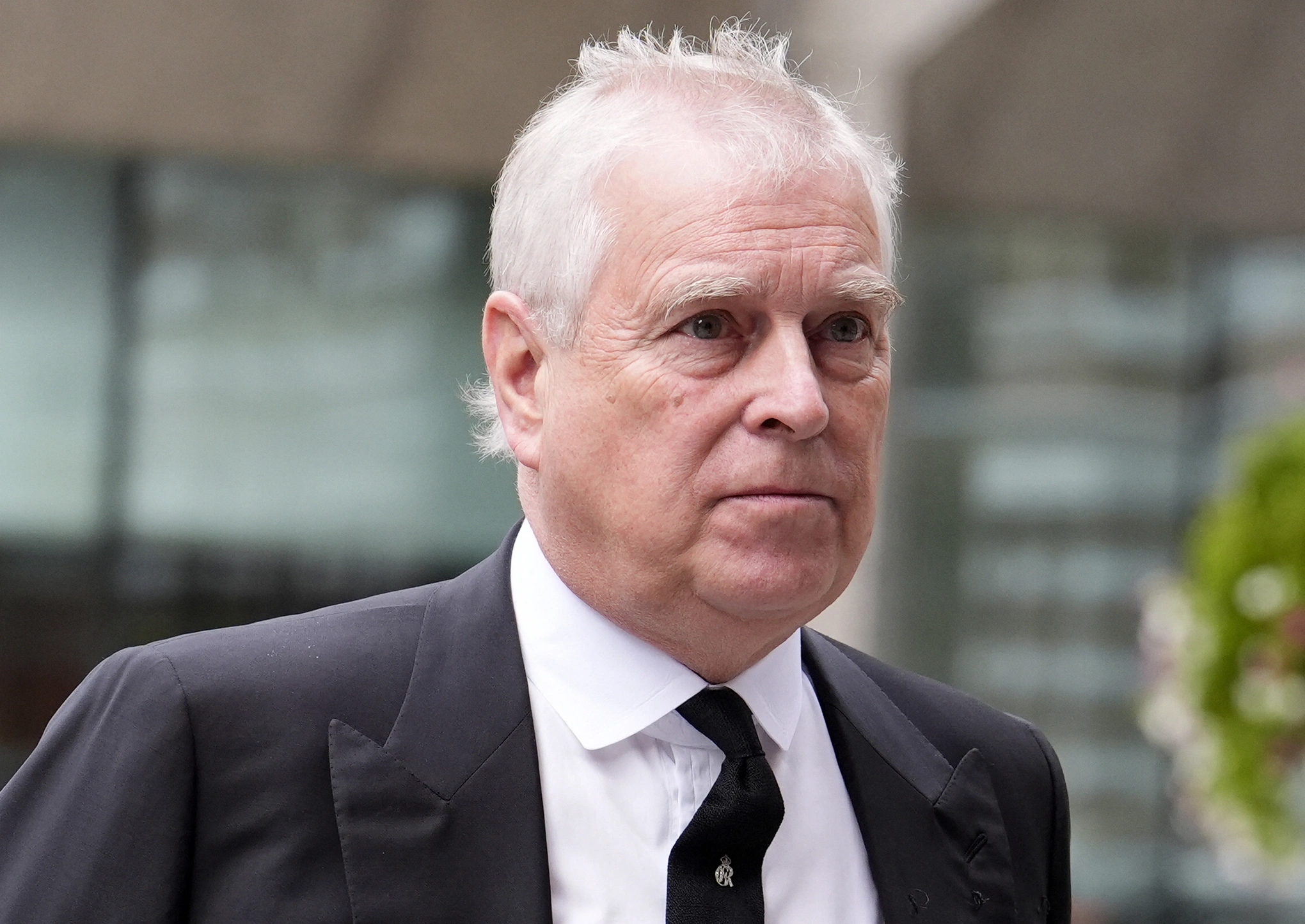
Andrew Mountbatten-Windsor is still alive, but reports about how his eventual funeral could be handled have already prompted controversy.
According to a recent report from the Mail on Sunday, Andrew reportedly remains among members of the wider Royal Family for whom official funeral arrangements are maintained in advance.
Planning ahead for royal deaths is nothing unusual. Arrangements for senior members of the Royal Family can be prepared many years beforehand and updated as circumstances change.
However, Andrew’s position has made the subject particularly sensitive.
The phrase “royal funeral” can describe very different kinds of ceremonies. While the death of a reigning monarch involves an enormous state occasion, funerals for other royals can be considerably smaller and more private.
Exactly what is currently planned for Andrew has not been publicly disclosed.
One possibility discussed by royal commentators is a ceremony resembling the funeral held for Princess Margaret in 2002.
Margaret’s service took place at St George’s Chapel in Windsor and was attended by roughly 400 people. Although primarily private, the arrival and departure of her coffin provided limited public ceremonial elements.
Princess Margaret also broke with longstanding royal tradition by becoming the first senior British royal to be cremated. Her ashes were subsequently placed in the King George VI Memorial Chapel at Windsor.
Reports concerning Andrew’s eventual arrangements have also raised the possibility that he could be buried at Frogmore, where numerous members of the Royal Family have been laid to rest.
Buckingham Palace has not publicly provided details about any such plans, which is unsurprising given the highly private nature of advance funeral arrangements.
If St George’s Chapel were ultimately chosen, the monarch reigning at the time would have an important role in determining whether a ceremony could take place there.
The chapel is a “royal peculiar,” meaning that rather than operating under the ordinary diocesan structure of the Church of England, it falls directly under the jurisdiction of the Crown.
Royal burials at Windsor have taken many different forms over the centuries. Some were elaborate national occasions, while others were conducted with remarkably little ceremony.
But Andrew’s circumstances have turned what would ordinarily be a private matter of royal planning into a subject of public argument.
His royal position underwent major changes amid continuing controversy surrounding his past association with convicted sex offender Jeffrey Epstein. Further developments reported in 2026 have added to the scrutiny surrounding him. Andrew has consistently denied wrongdoing.
Against that background, representatives connected with Epstein’s victims have argued that Andrew should not receive ceremonial royal recognition when he dies, including the distinction associated with a royal funeral.
Others may distinguish between a private family funeral and the kind of public honours normally associated with senior working members of the monarchy.
Ultimately, however, any arrangements being discussed today are far from final.
Royal funeral plans can be revised, and the monarch in place at the time would have significant influence over what actually happens.
That means the current controversy is less about an imminent funeral and more about a difficult question facing the monarchy:
When someone has lost their public royal status, should their place within the Royal Family still entitle them to royal traditions in death?